A good wedding day timeline is invisible. Nobody notices it, because everything simply happens when it should: the photos are done before the light goes, dinner is hot, the speeches are short, and the dance floor fills up at the right moment.
Below you will find a full sample timeline for a 4pm ceremony, shorter versions for other start times, the order of events at the reception, and the realistic durations your timeline should be built from.
On this page
How long each part of the day takes
Build your timeline from these durations and add buffers. Everything runs late at weddings, and a timeline with no slack is the main cause of stress on the day.
| Part of the day | Typical length |
|---|---|
| Hair and makeup | 45 to 60 minutes per person, 1.5 to 2 hours for the bride |
| Getting dressed | 30 minutes |
| First look and couple portraits | 30 to 45 minutes |
| Wedding party photos | 20 to 30 minutes |
| Family photos | 20 to 30 minutes (about 2 minutes per group) |
| Civil ceremony | 20 to 30 minutes |
| Religious ceremony | 45 to 75 minutes |
| Cocktail hour | 60 minutes |
| Guests finding their seats | 10 to 15 minutes |
| Dinner, served | 60 to 90 minutes |
| Toasts | 3 to 5 minutes per speaker |
| Open dancing | 2 to 3 hours |
| The whole reception | 4 to 6 hours |
A full wedding day, from the first hair appointment to the send-off, typically takes 10 to 12 hours.
Sample timeline: 4pm ceremony
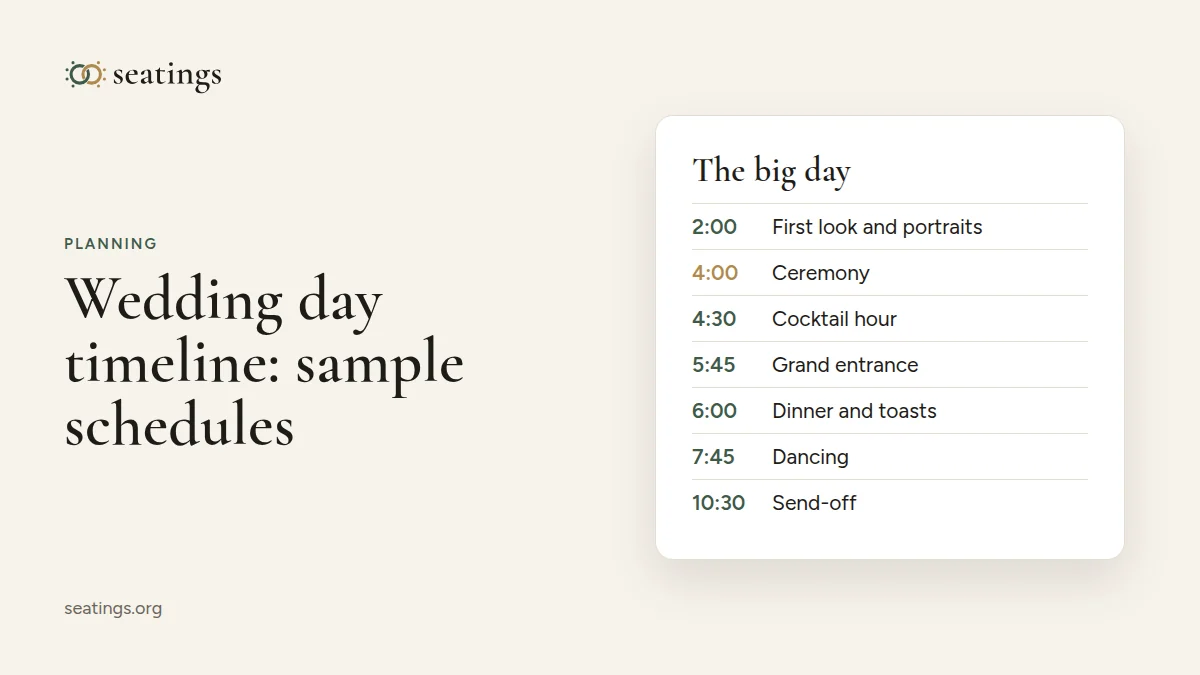
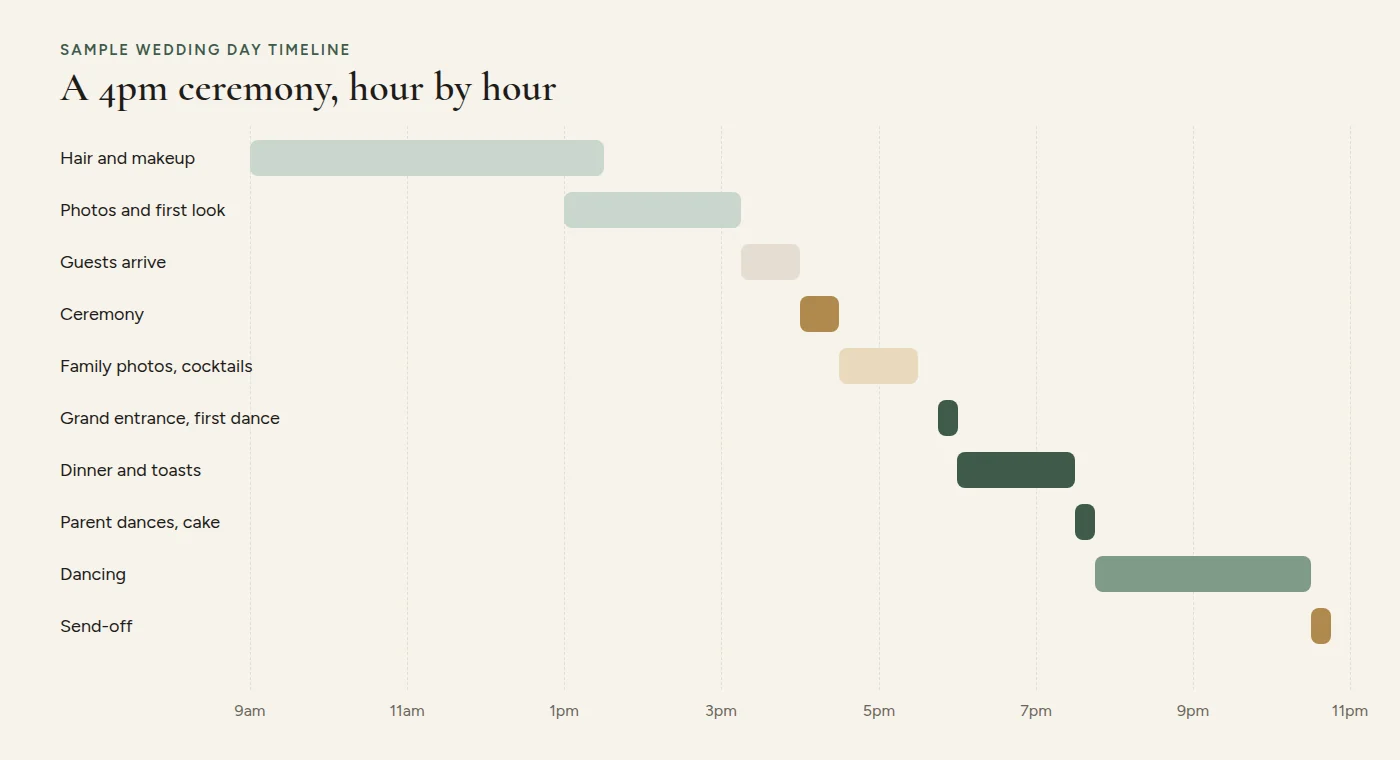
This is the most common schedule for an evening reception, with a first look so most photos happen before the ceremony.
| Time | What happens |
|---|---|
| 9:00 am | Hair and makeup begins for the wedding party |
| 11:30 am | Bride's hair and makeup |
| 12:30 pm | Lunch for everyone getting ready (do not skip this) |
| 1:00 pm | Photographer arrives: details, rings, invitation suite |
| 1:30 pm | Getting dressed |
| 2:00 pm | First look and couple portraits |
| 2:45 pm | Wedding party photos |
| 3:15 pm | Couple hides away. Guests start arriving |
| 3:45 pm | Ushers seat guests. Music starts |
| 4:00 pm | Ceremony |
| 4:30 pm | Family photos, then cocktail hour for guests |
| 5:30 pm | Guests find their seats |
| 5:45 pm | Grand entrance, welcome, first dance |
| 6:00 pm | Dinner service |
| 6:45 pm | Toasts, between courses |
| 7:30 pm | Parent dances, cake cutting |
| 7:45 pm | Dance floor opens |
| 9:00 pm | Late-night snack |
| 10:30 pm | Last dance and send-off |
Shorter timelines for other ceremony times
1pm ceremony (daytime wedding with lunch)
- 8:00 am: hair and makeup
- 11:00 am: first look and portraits
- 12:30 pm: guests arrive
- 1:00 pm: ceremony
- 1:30 pm: family photos and drinks
- 2:30 pm: lunch, toasts
- 4:00 pm: cake, first dance, dancing
- 6:00 pm: send-off
3pm ceremony (no first look)
- 10:00 am: hair and makeup
- 1:30 pm: getting dressed, detail photos
- 3:00 pm: ceremony
- 3:30 pm: family, wedding party and couple photos during cocktail hour
- 5:00 pm: grand entrance and dinner
- 6:30 pm: toasts and first dance
- 7:00 pm: dancing
- 10:00 pm: send-off
5pm ceremony (evening, sunset photos)
- 11:00 am: hair and makeup
- 3:00 pm: first look and portraits
- 4:30 pm: guests arrive
- 5:00 pm: ceremony
- 5:30 pm: cocktail hour
- 6:30 pm: dinner
- 7:15 pm: sunset portraits (10 to 15 minutes, between courses)
- 7:45 pm: toasts, first dance
- 8:15 pm: dancing
- 11:00 pm: send-off
The order of events at a wedding reception
The traditional order in the US, which you can freely rearrange:
- Cocktail hour
- Guests are seated
- Grand entrance of the couple
- Welcome by a parent or the MC
- First dance (now, or after dinner)
- Dinner
- Toasts, often between courses
- Parent dances
- Cake cutting
- Open dancing
- Bouquet and garter toss (optional)
- Last dance and send-off
Doing the first dance and toasts early means the older guests see them before they leave, and the dance floor can stay open for the rest of the night.
How to get 120 people seated in 15 minutes
The move from cocktail hour to dinner is where most timelines slip. What helps:
- A clear seating chart at the entrance, sorted alphabetically for larger weddings. Our guide explains how to make a wedding seating chart guests can read in seconds.
- Table numbers visible from across the room, on stands at least 20 to 30 cm (8 to 12 inches) tall.
- Escort cards or place cards that match the chart. If you are unsure which you need, read escort cards vs place cards.
- A friendly nudge: the DJ or MC announces dinner and asks guests to find their seats 10 minutes before the entrance.
Print a seating chart, escort cards and table numbers that always match, from one guest list.
Tips for a timeline that works on the day
- Build in buffers. Add 10 to 15 minutes before the ceremony and before the grand entrance.
- Check sunset time for your date and location, and plan portraits for the hour before it.
- Make a family photo list with names, so the photographer can call groups quickly.
- Share it. Every vendor, the wedding party and your coordinator should have the same version, with phone numbers.
- Name one person in charge who is not the couple and not a parent.
- Plan food for yourselves. Ask the caterer to serve you first, and to pack a box of dinner if you miss it.
Frequently asked questions
What is a typical timeline for a wedding day?
Hair and makeup in the morning, photos in the early afternoon, the ceremony in the afternoon, then about an hour of cocktails, dinner with toasts, and two to three hours of dancing. The whole day usually runs 10 to 12 hours.
How long should a wedding reception be?
Four to six hours is standard: about an hour of cocktails, one to one and a half hours for dinner and toasts, and two to three hours of dancing.
When should toasts happen at a wedding?
Most couples have toasts during dinner, between courses, when guests are seated and listening. Keep each toast to three to five minutes.
What time should a wedding ceremony start?
Afternoon ceremonies between 3pm and 5pm are the most common, because they leave time to get ready and put portraits in good light. Check sunset for your date.