You are engaged, congratulations. The next question everybody asks is "have you set a date?", and the question you are asking yourselves is "where do we even start?".
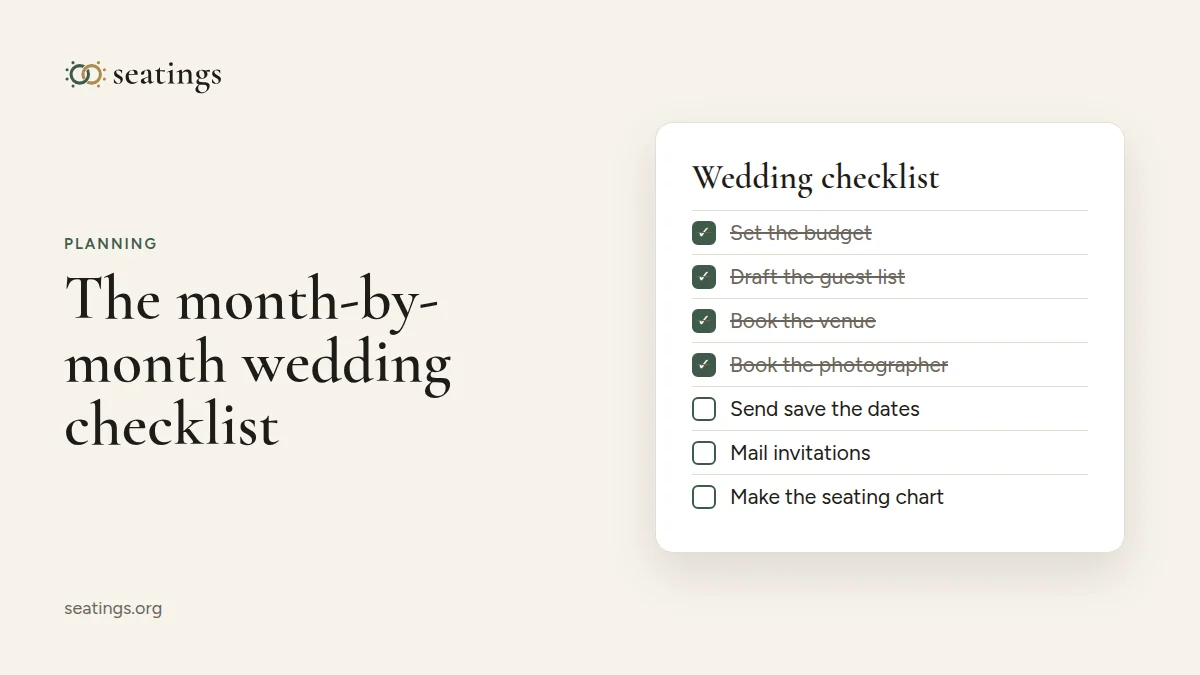
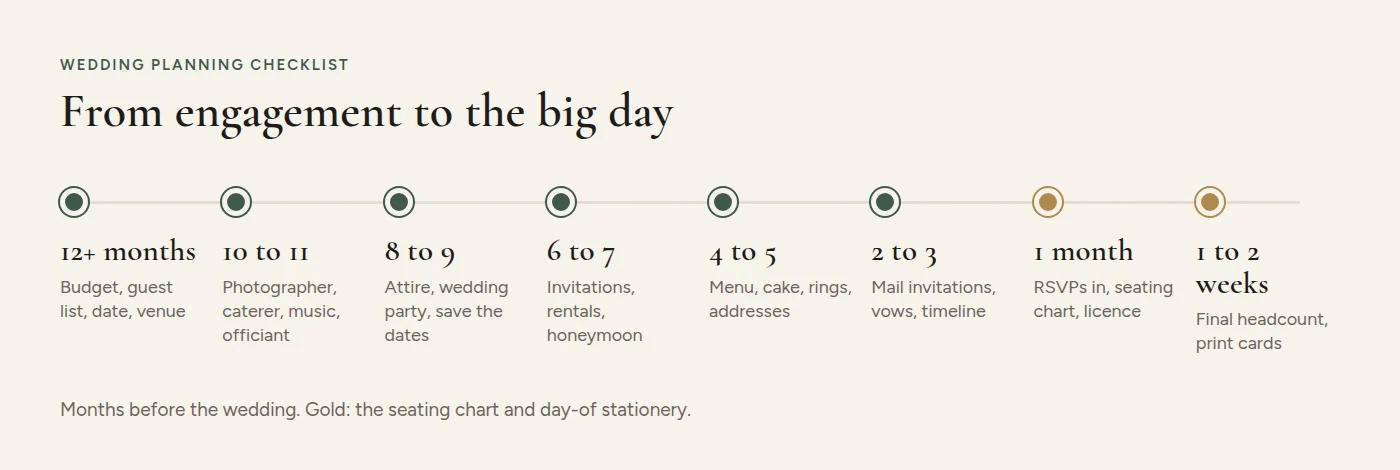
This checklist puts every wedding task in the order that actually works, based on how far ahead vendors book up and what depends on what. It assumes a 12-month engagement. If you have less time, start at the top anyway and squeeze the steps together: the order matters more than the months.
Download the free printable checklist as a PDF: wedding planning checklist (PDF). Print it, stick it on the fridge and tick things off together.
On this page
- 12 months or more before: the big three
- 10 to 11 months before: the vendors who book up first
- 8 to 9 months before: the look and the guests
- 6 to 7 months before: details
- 4 to 5 months before: the reception
- 2 to 3 months before: invitations out
- 1 month before: headcount and seating
- 1 to 2 weeks before: final details
- The week of the wedding
- After the wedding
- If you have less than 12 months
- Frequently asked questions
12 months or more before: the big three
Three decisions shape everything else: your budget, your guest count and your date and venue. Do them in this order, because the budget limits the guest count and the guest count limits the venue.
- Celebrate. Tell your families before you post it online.
- Talk about the wedding you both want: big party or small dinner, city or countryside, religious or civil.
- Agree on a budget and who contributes what. The average US wedding cost about $34,000 in 2025, or about $292 per guest, according to The Knot 2026 Real Weddings Study. Your number can be much lower.
- Write a first guest list with everyone you might invite. Our wedding guest list guide shows how to build it in tiers.
- Choose a season and two or three possible dates.
- Visit venues and book one. Popular venues book 12 to 18 months ahead for Saturdays in peak season.
- Decide whether you want a planner or a day-of coordinator, and book them early.
- Consider wedding insurance once you pay the first big deposits.
10 to 11 months before: the vendors who book up first
- Book your photographer. The best ones are booked a year or more ahead.
- Book your caterer if the venue does not include one.
- Book your band or DJ.
- Book your officiant, or ask a friend and check how they can become legally able to marry you where you live.
- Start a shared planning spreadsheet or app with your guest list, budget and vendor contacts.
- Create a wedding website with the date, location and travel information.
8 to 9 months before: the look and the guests
- Choose your wedding party.
- Shop for the wedding dress or suit. Dresses often take four to six months to arrive, plus time for alterations.
- Book a videographer and florist.
- Reserve hotel room blocks for out-of-town guests.
- Send save the dates, six to eight months ahead, or eight to twelve months for destination weddings. See when to send wedding invitations for the exact timing.
6 to 7 months before: details
- Choose and order your invitations.
- Book hair and makeup artists.
- Plan and book the honeymoon. Check passport expiry dates now.
- Order bridesmaid dresses and book suit fittings.
- Book rentals: tables, chairs, linens, a tent, lighting.
- Book transport for the day if you need it.
- Start your gift registry.
4 to 5 months before: the reception
- Order the cake and schedule a tasting.
- Plan the menu with your caterer.
- Choose the ceremony music and readings.
- Buy your wedding rings, allowing time for sizing and engraving.
- Plan the rehearsal dinner.
- Collect mailing addresses for every invited household.
2 to 3 months before: invitations out
- Mail invitations six to eight weeks before the wedding, and eight to twelve weeks for destination weddings.
- Set your RSVP deadline three to four weeks before the day.
- Write your vows if you are writing your own.
- Confirm the timing of the day with your photographer and venue. Our wedding day timeline has ready-made schedules.
- Book first dress fittings.
- Buy accessories, shoes and gifts for the wedding party.
- Check what you need for the marriage licence and when you have to apply.
1 month before: headcount and seating
- Chase missing RSVPs a few days after the deadline. A friendly message works.
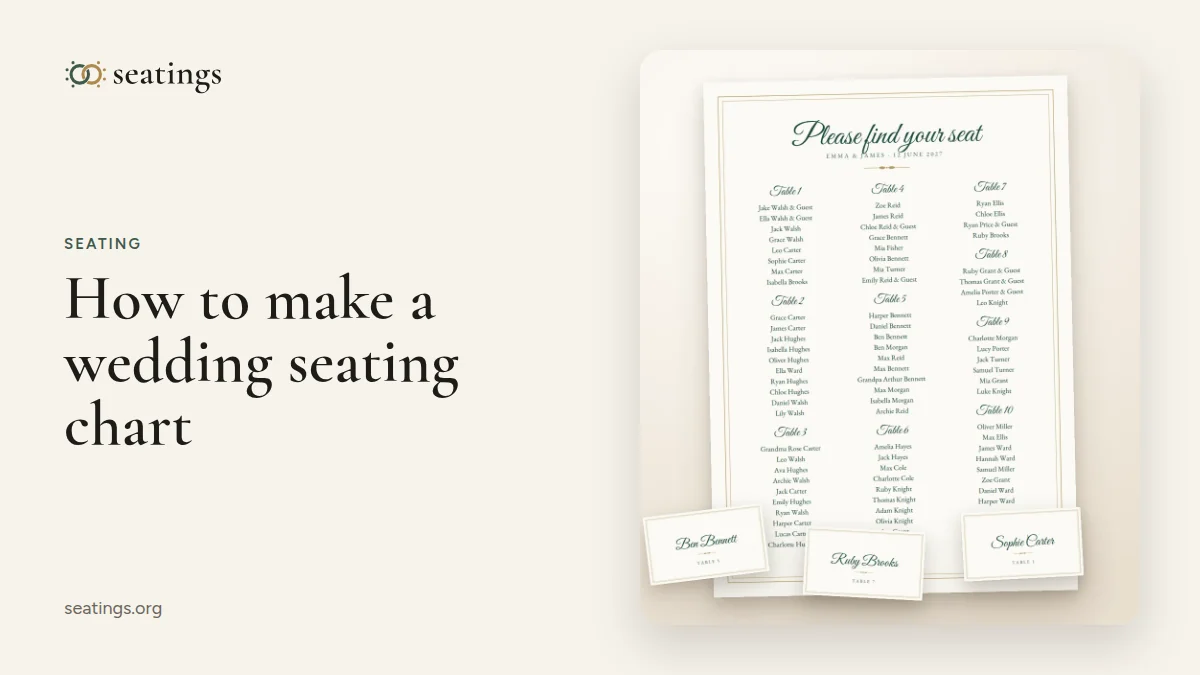
- Start your seating chart as soon as most replies are in. Our step-by-step guide explains how to make a wedding seating chart without drama.
- Order escort cards, place cards, table numbers, menus and the welcome sign, or print them yourself.
- Apply for your marriage licence.
- Final dress fitting.
- Confirm every vendor: arrival time, address, contact person on the day.
Build your seating chart and print a matching chart, escort cards, place cards, table numbers, menu and welcome sign from the same list.
1 to 2 weeks before: final details
- Give the final headcount to the caterer and venue, usually 7 to 14 days before.
- Finish the seating chart and send the table plan to the venue and caterer, with meal choices per table.
- Print or collect all stationery.
- Send the day's timeline to your vendors, wedding party and the person who will run things on the day.
- Prepare envelopes with final payments and tips.
- Break in your shoes.
The week of the wedding
- Pack for the honeymoon.
- Put together an emergency kit: safety pins, painkillers, plasters, stain remover, phone chargers, snacks.
- Hand everything for the reception to one trusted person or your coordinator: stationery, favours, guest book, card box.
- Rehearsal and rehearsal dinner.
- Sleep. Really.
After the wedding
- Return rentals and suits.
- Send thank-you notes within three months.
- Change your name on documents, if you are changing it.
- Leave reviews for the vendors you loved. It helps small businesses more than you think.
If you have less than 12 months
Keep the same order and compress it:
| Time until the wedding | What to do first |
|---|---|
| 6 months | Budget, guest count, venue and photographer in the first two weeks. Save the dates as soon as the venue is booked. |
| 3 months | Pick a venue with in-house catering, send invitations (skip save the dates), choose a ready-to-wear dress. |
| 6 weeks | Keep it small, use one venue for ceremony and reception, and invite by phone or email. |
Frequently asked questions
What is the first thing to do when planning a wedding?
Agree on a budget and a rough guest count, then book the venue. Almost every other decision depends on those three.
How long does it take to plan a wedding?
Most couples plan for 12 to 15 months. Six months is very doable with flexible dates, and a small wedding can be organised in a few weeks.
What is the 50/20/30 rule for weddings?
There is no single official version. It is a budgeting shortcut that gives about half the budget to the venue, food and drink, and splits the rest between the things guests see and remember (photography, music, flowers, attire) and everything else, including a buffer. Treat it as a starting point, then move money to what matters most to you.
When should you start the seating chart?
About six weeks before the wedding, after most RSVPs are in, and finish it one to two weeks before so it matches the final headcount.