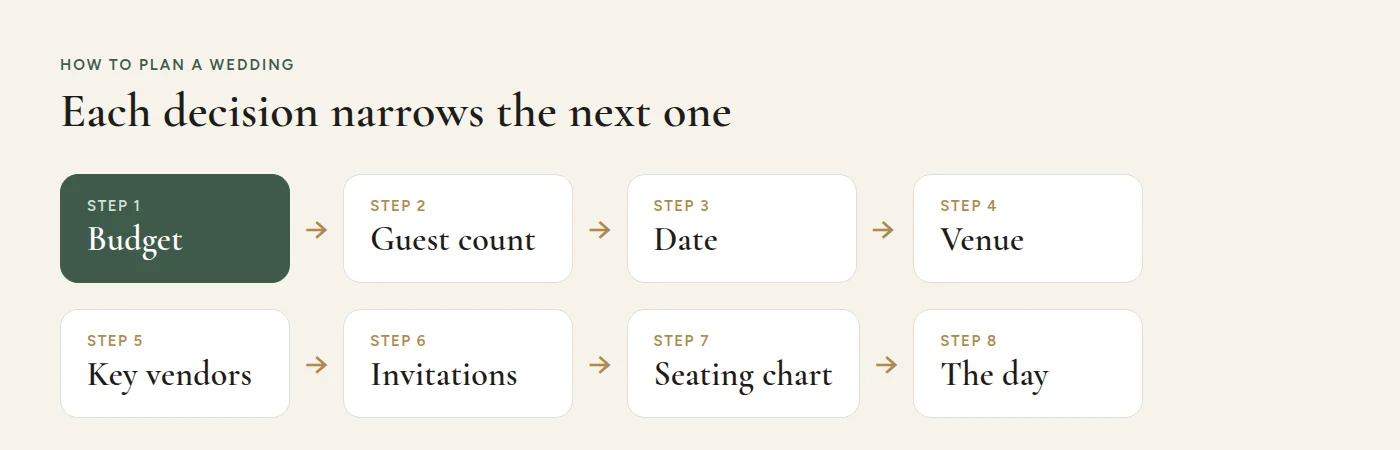
Planning a wedding is not hard because any single task is difficult. It is hard because there are about a hundred of them, they depend on each other, and everyone you know has an opinion. The trick is to make the big decisions in the right order, so each one makes the next one easier.
These are the 15 steps we would follow if we were planning our own wedding tomorrow. If you want a detailed month-by-month to-do list, use our wedding planning checklist alongside this guide.
On this page
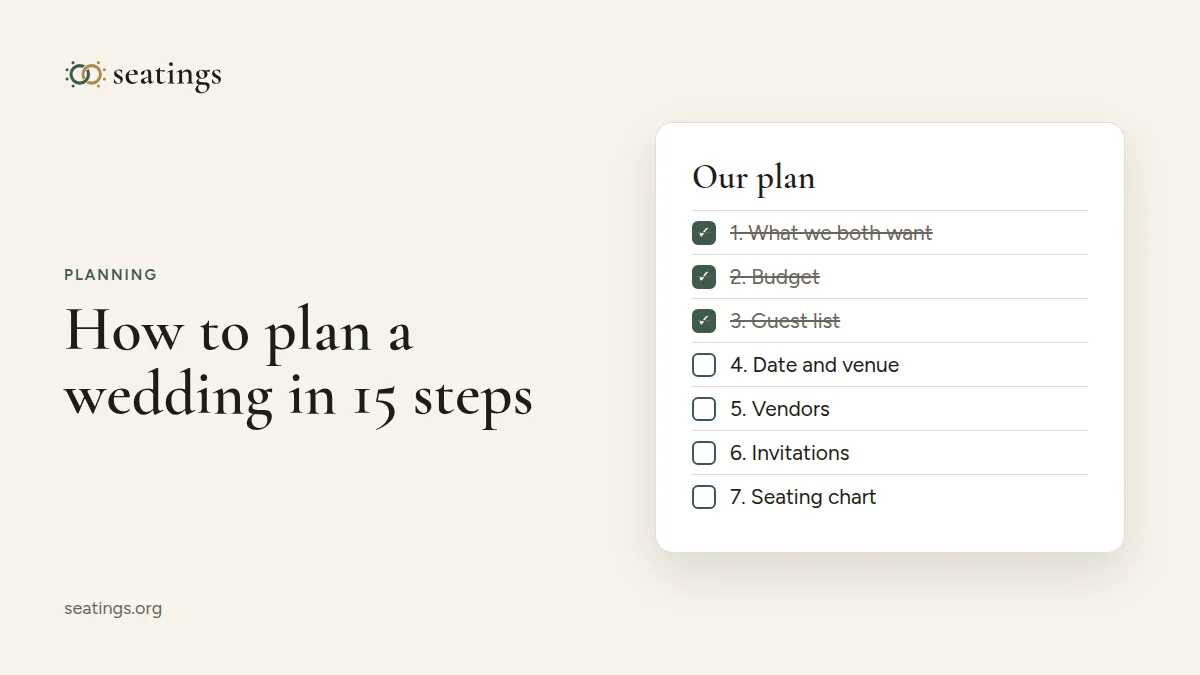
- 1. Talk about what you both actually want
- 2. Set a realistic budget
- 3. Draft the guest list
- 4. Choose a season and a few possible dates
- 5. Book the venue
- 6. Decide how much help you want
- 7. Book the vendors who book up first
- 8. Build a wedding website and send save the dates
- 9. Choose what you will wear
- 10. Plan the ceremony
- 11. Plan the reception
- 12. Send the invitations
- 13. Make the seating chart
- 14. Write the timeline for the day
- 15. Hand it over
- How to plan a wedding on a budget
- Frequently asked questions
1. Talk about what you both actually want
Before you open a single venue website, sit down together and answer five questions honestly:
- How many people do we picture in the room: 30, 100, 250?
- What matters most to us: the food, the party, the photos, the ceremony, the location?
- What do we not care about at all?
- Who is paying, and how much?
- What would make us feel it was our wedding?
Write the answers down. When you are tired and a vendor is upselling you in month seven, this list is how you say no.
2. Set a realistic budget
Add up what the two of you can put in and what family members are offering. Ask family directly whether their contribution comes with expectations, for example a longer guest list.
For context, the average US couple spent about $34,000 on their wedding in 2025, around $292 per guest (The Knot 2026 Real Weddings Study). Per-guest cost is the most useful number: every guest you add costs food, drink, a chair, a share of the venue and stationery.
Keep 5 to 10 percent of the budget as a buffer. Something always costs more than planned.
3. Draft the guest list
The guest list drives the budget and the venue, so draft it before you fall in love with a place. Start with everyone you might invite, then sort them into tiers: must invite, would like to invite, if there is room. Our guest list guide explains how to cut it down without starting a family feud.
Expect roughly 75 to 85 percent of invited guests to come, depending on how many travel. Plan the venue for the full list anyway.
4. Choose a season and a few possible dates
Being flexible on the date is the single biggest money saver. Fridays, Sundays and off-season months are often much cheaper than Saturdays in June or September. Pick two or three dates you would be happy with and let venue availability decide.
5. Book the venue
The venue decides your date, your guest count, and often your caterer and rentals. When you visit, ask:
- How many guests fit for a seated dinner with a dance floor?
- What is included: tables, chairs, linens, catering, bar, staff, clean-up?
- Is there a minimum spend, a service charge or an end time?
- What happens if it rains (for outdoor venues)?
- Can we see a floor plan? You will need it for the seating chart.
6. Decide how much help you want
A full-service planner handles everything. A partial planner helps with design and vendors. A day-of coordinator (who usually starts a month or so before) runs the timeline so you and your family can enjoy the day. Even on a small budget, someone who is not a guest should be in charge on the day.
7. Book the vendors who book up first
In rough order: photographer, caterer (if not included), band or DJ, officiant, videographer, florist. Good photographers in popular seasons are often booked a year ahead. Read contracts carefully: what is included, overtime rates, cancellation terms.
8. Build a wedding website and send save the dates
A simple wedding website with the date, place, hotels and travel tips saves you hundreds of messages. Send save the dates six to eight months before, or eight to twelve months for a destination wedding. The full timeline is in when to send wedding invitations.
9. Choose what you will wear
Dresses often take several months to arrive, plus two or three fittings. Suits need fittings too. Start about eight to nine months before.
10. Plan the ceremony
Decide on the structure, readings, music and vows with your officiant. Check the legal requirements where you marry: documents, witnesses, the marriage licence and how long it is valid.
11. Plan the reception
Menu, drinks, cake, music, speeches, first dance. Decide whether you want a sweetheart table or a head table and what kind of tables the room will have. Our guide to wedding table sizes shows how many guests fit at each.
12. Send the invitations
Mail invitations six to eight weeks before the wedding and ask for replies three to four weeks before. Track RSVPs in one place, together with meal choices, plus ones and children. You will need all of it for the seating chart.
13. Make the seating chart
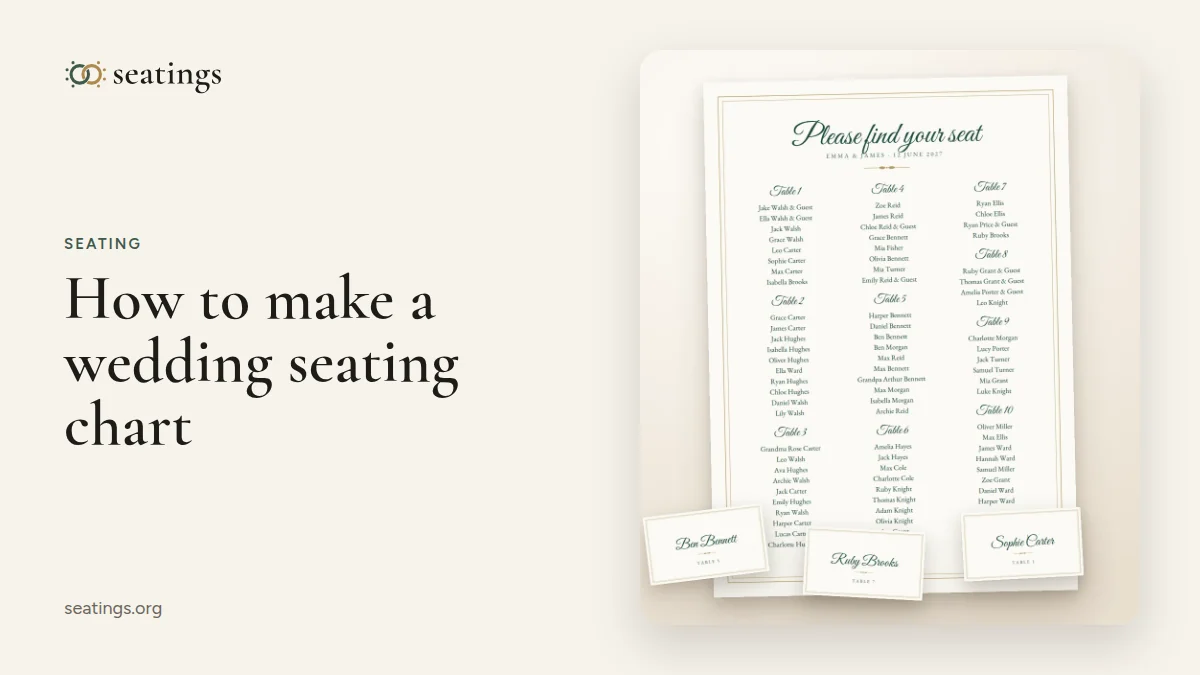
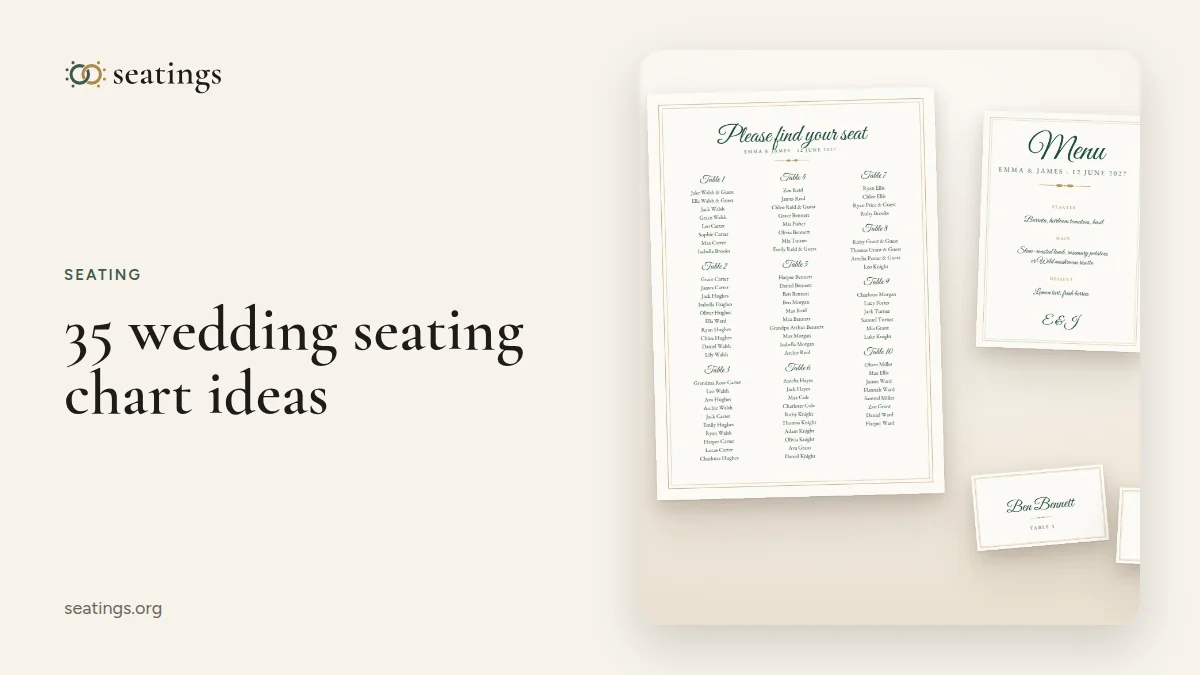
Start once most RSVPs are in, around four to six weeks out. Seat the VIPs first, then group everyone else by who they know. Our guide on how to make a wedding seating chart walks through it step by step.
Import your guest list, draw your room and seat everyone in an evening. Free to plan, $19 once for AI seating and the print pack.
14. Write the timeline for the day
A written schedule, from hair and makeup to the last dance, shared with every vendor and your wedding party, is what makes a wedding day feel calm. Use our sample wedding day timelines as a starting point.
15. Hand it over
In the last week, give one trusted person or your coordinator everything for the day: the timeline, the vendor list with phone numbers, the stationery, the seating chart, the favours. Then step back. Your job on the day is to get married and enjoy it.
How to plan a wedding on a budget
- Cut the guest list first. It is the biggest lever by far.
- Choose an off-peak date: a Friday, a Sunday, or a month outside wedding season.
- Pick an all-in-one venue where the ceremony and reception happen in the same place, ideally with in-house catering and rentals.
- Serve a shorter bar: beer, wine and one signature cocktail instead of a full open bar.
- Print your own stationery or use one design for everything, from the seating chart to the menus.
- Borrow and buy second-hand: dresses, decor and signs are sold on after almost every wedding.
Frequently asked questions
What is the first step in planning a wedding?
Agree together on what kind of wedding you want and what you can spend. Then draft the guest list and book the venue.
How many months does it take to plan a wedding?
Most couples take 12 to 15 months, mainly because popular venues and photographers book that far ahead. Six months is doable with flexible dates.
What should you not forget when planning a wedding?
Commonly forgotten items are the marriage licence, vendor meals, tips, a rain plan, a timeline for the day and someone other than you in charge on the day.
How can I plan a wedding without a planner?
Use a checklist, keep all guest and vendor information in one place, and hire a day-of coordinator or ask an organised friend to run the day itself.