Escort cards and place cards sound like the same thing, and plenty of shops use the names interchangeably. They are not. One tells a guest which table to go to, the other tells them which chair to sit in. Knowing the difference saves you from printing 150 cards you did not need.
This guide explains both, helps you decide which you need, and covers the rest of the "day-of" stationery that goes with them: table numbers, the welcome sign, menus and the seating chart.
On this page
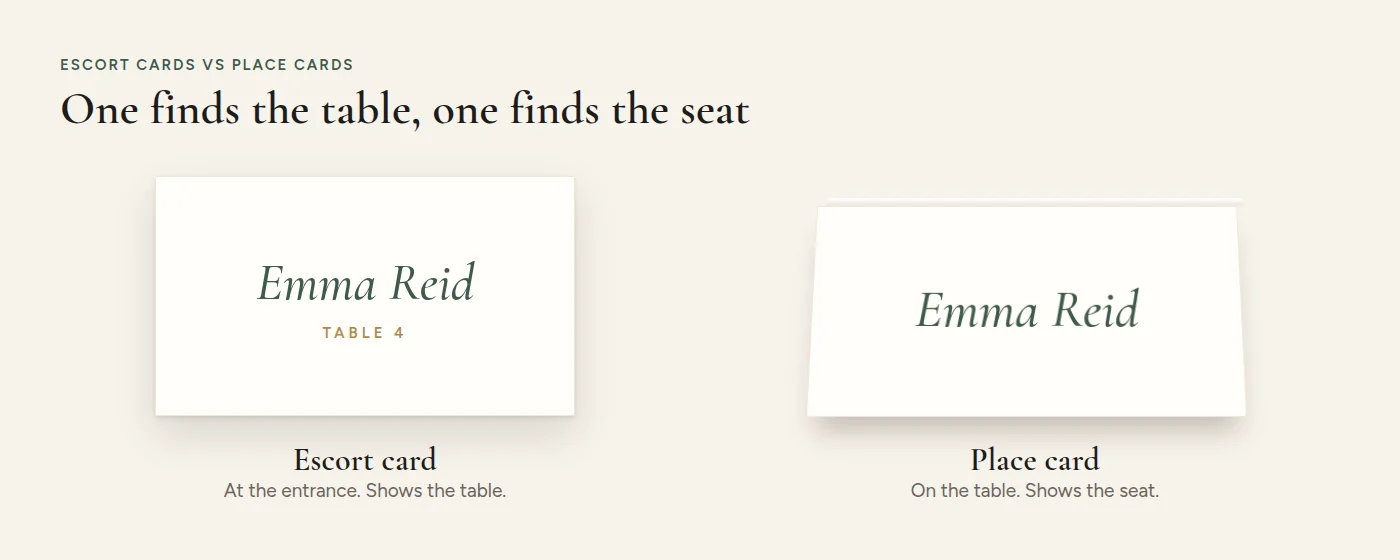
The difference in one sentence
- Escort cards are displayed at the entrance of the reception. Each one shows a guest's name and table number. Guests pick theirs up and find their table.
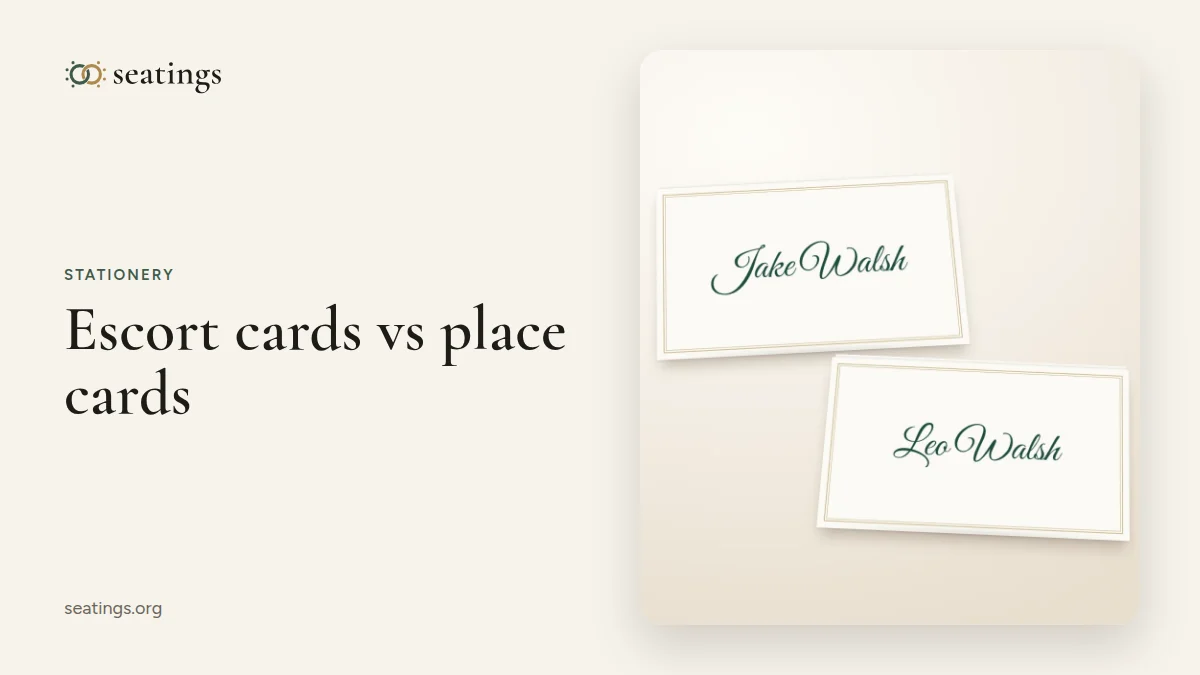
- Place cards sit on the table, at each place setting. Each one shows a guest's name so they know which seat is theirs.
Do you need both?
It depends on how precisely you seat people:
| Your seating plan | What you need |
|---|---|
| Guests choose any table | Nothing (or a welcome sign) |
| Assigned tables, free seats | Escort cards or a seating chart |
| Assigned tables and assigned seats | A seating chart or escort cards, plus place cards |
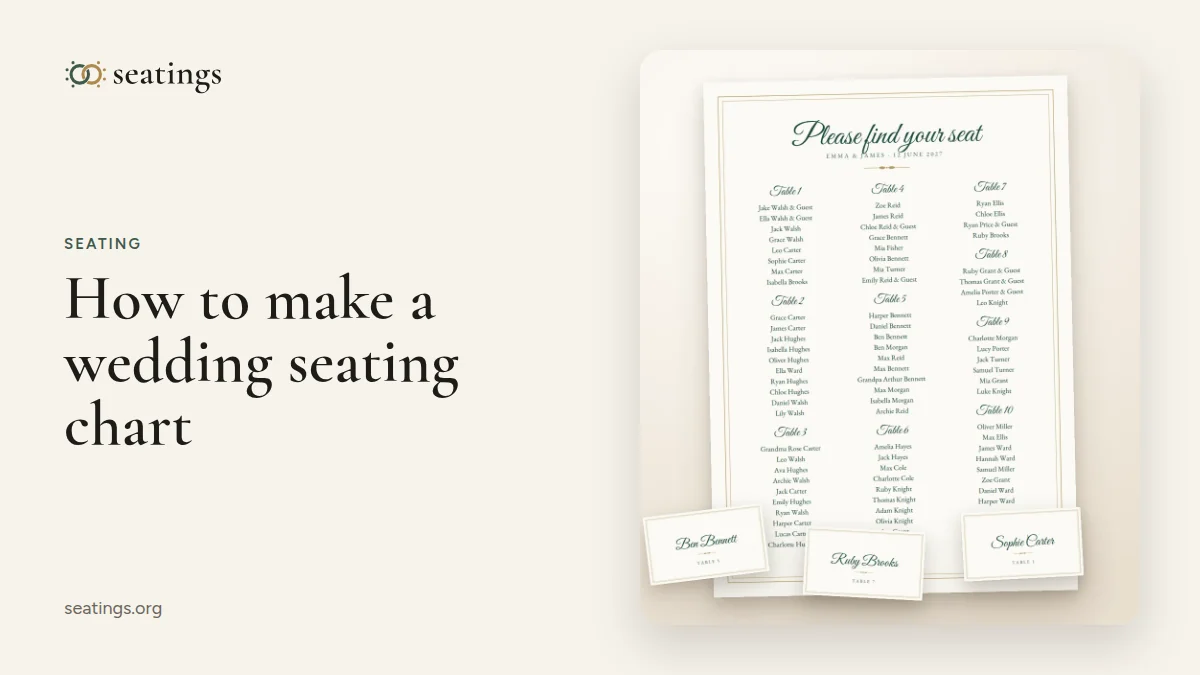
Seating chart or escort cards? They do the same job. A seating chart is one big sign with every name and table. Escort cards are one card per guest. A chart is cheaper and faster to set up; escort cards double as a keepsake or favour. Many couples use a chart for finding tables and place cards for seats. See how to make a wedding seating chart.
When are place cards worth it?
- Plated dinners where guests chose their meal in advance. The place card tells the waiter who ordered what, often with a small symbol.
- Formal weddings and head tables.
- Long tables, where "sit anywhere at table 4" means a 20-metre table.
- Seating couples with people they do not know, to break up cliques.
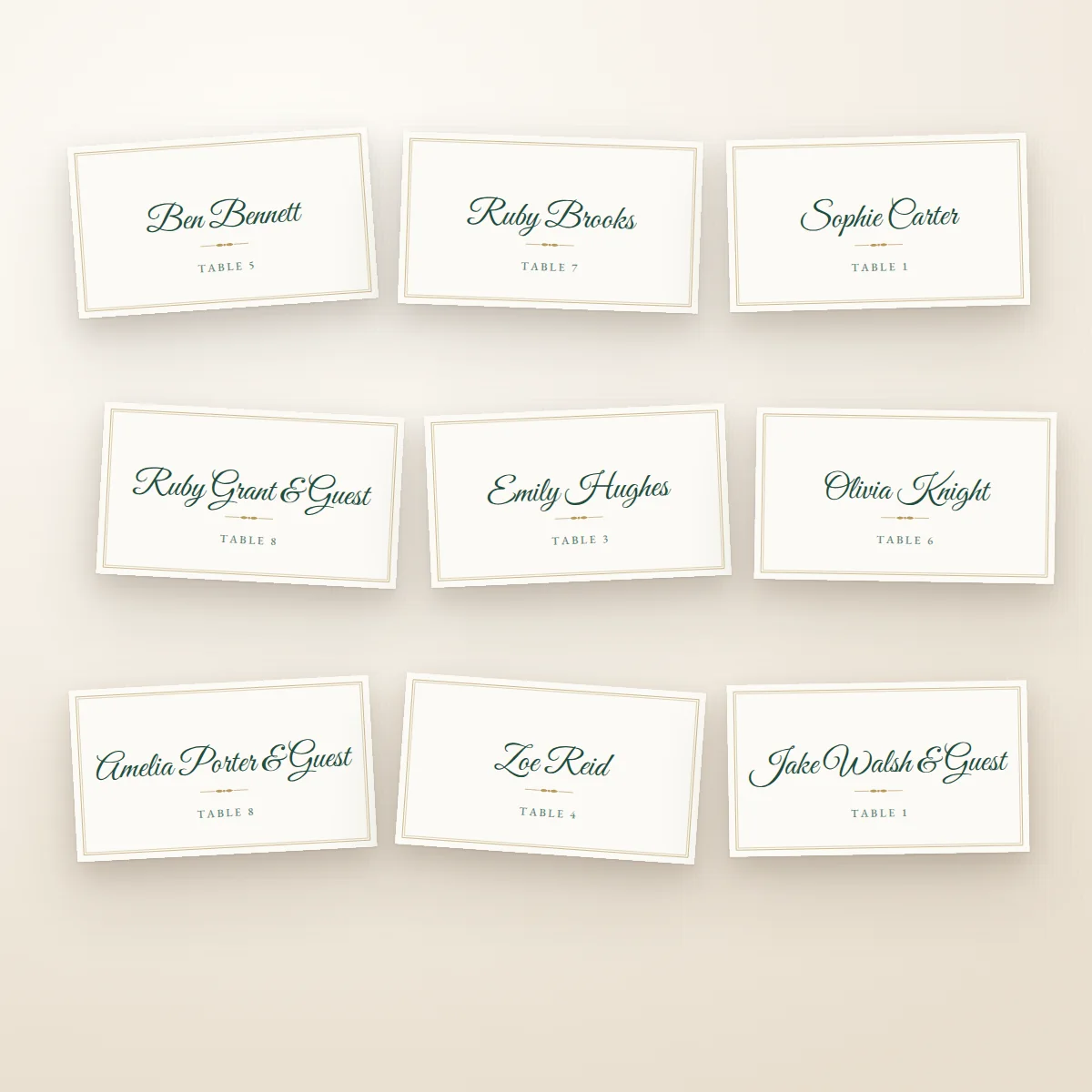
What goes on escort cards
- The guest's name, as it appears on the list. One card per guest, or one per couple ("Grace & Oliver Bennett").
- The table number or table name.
- Optionally, a small meal symbol if your caterer needs it (see meals on escort and place cards).
Sort them alphabetically by surname at the display, so guests find their card in seconds. Common sizes: 3.5 by 2 inches flat or tented, or A7 (about 7 by 10 cm) in Europe.
What goes on place cards
- The guest's name, printed large enough to read across the table.
- Optionally a meal symbol, a small monogram or your initials.
Place cards are usually tented (folded) so they stand up, about 3.5 by 2 inches when folded. Print the name on both sides if guests sit on both sides of a long table.
Table numbers
Table numbers help guests and waiters find tables from across the room. Make them large, about 4 by 6 inches or 5 by 7 inches, on stands at least 20 to 30 cm (8 to 12 inches) tall so they are visible above centrepieces. If you use table names, add a small number too, so staff can serve by number.
The welcome sign
A welcome sign greets guests at the ceremony or reception entrance with your names and the date. The common sizes are 18 by 24 inches and 24 by 36 inches (A2 and A1). You can add the order of the day: ceremony, cocktails, dinner, dancing.
Menus
A menu card at each place, or one per table, tells guests what is coming and helps those with allergies. The usual sizes are 4 by 9 inches (a tall card that sits on a napkin) or 5 by 7 inches (A5).
Stationery sizes at a glance
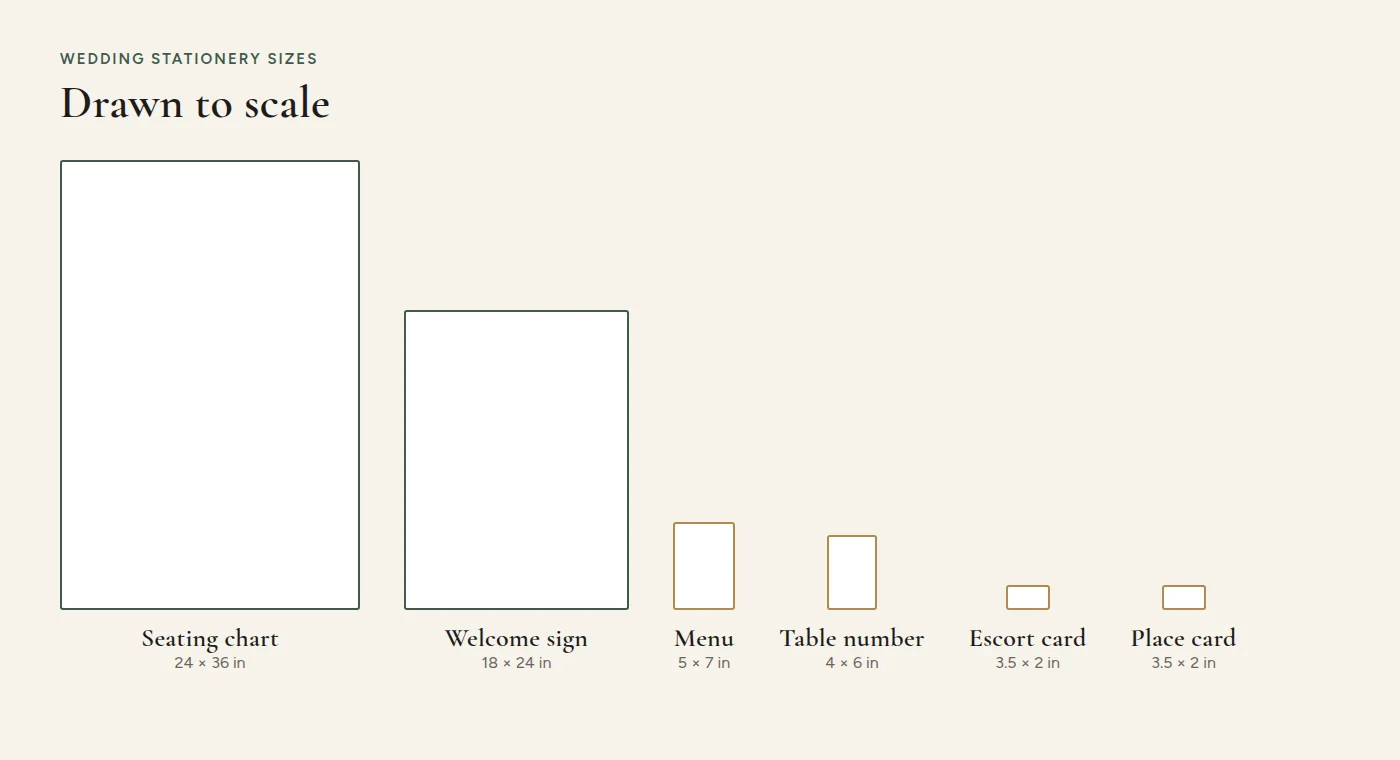
| Piece | US size | Europe |
|---|---|---|
| Seating chart | 18 × 24 in or 24 × 36 in | A2 or A1 |
| Welcome sign | 18 × 24 in or 24 × 36 in | A2 or A1 |
| Menu | 4 × 9 in or 5 × 7 in | A5 or DL |
| Table number | 4 × 6 in or 5 × 7 in | A6 or A5 |
| Escort card | 3.5 × 2 in | A7 or 85 × 55 mm |
| Place card (folded) | 3.5 × 2 in | 85 × 55 mm |
When to order and print
- Design as soon as your invitations are done, so everything matches.
- Print after the RSVP deadline and the final seating chart, about 7 to 10 days before the wedding.
- Keep a few blanks and a pen for last-minute guests, or bring a laptop and printer to the venue if you print at home.
One list, one design, no mismatches
The classic stationery disaster: the chart says table 6, the escort card says table 4, and the place card spells the name wrong. It happens when each piece is made separately from a different version of the list.
seatings makes all six pieces from your seating: the seating chart, escort cards, place cards, table numbers, menu and welcome sign, in one matching style. Move a guest and every piece updates. Download print-ready PDFs for a print shop (with bleed and cut marks) or your home printer. See the print pack and cutting and folding cards.
Make escort cards, place cards, table numbers, a menu and a welcome sign that always match your seating chart.
For display ideas, see our 35 wedding seating chart ideas.
Frequently asked questions
What is the difference between escort cards and place cards?
Escort cards tell guests which table they sit at and are displayed at the entrance. Place cards sit at each place setting and show which seat is theirs.
Do I need place cards if I have a seating chart?
Only if you assign seats, not just tables. For plated dinners with pre-chosen meals, place cards help waiters serve the right meal.
Should escort cards be alphabetical?
Yes. Sort them alphabetically by surname so guests can find their card quickly, especially at weddings of more than about 80 guests.
What size are escort cards?
Usually 3.5 by 2 inches flat or tented in the US, and about 85 by 55 mm or A7 in Europe.
Can I use escort cards as favours?
Yes. Tie them to a small favour such as a jar of honey, a plant cutting or a mini bottle, and the favour becomes the escort card.